
A few years ago, I was at a conference where the depleting health workforce and staff attrition in the UK health system, the NHS, was discussed. Among ways proposed to improve this was to make staff ‘feel more valued’ at work. To assess current perceptions, a quick opinion poll was conducted among the audience and just a few hands went up when asked if they felt ‘valued’ at work. It got me thinking: what does it mean to feel valued at work?

My first thought was that feeling valued is a subjective perception hence experiences, even under the same working conditions will differ. People will attest to the fact that they’ve had better experiences working in some places than in others. But the question is what accounts for this? Does this mean feeling valued? It is important to highlight that being valued is different from feeling valued. One may be valued highly by their employer without feeling it. The Cambridge dictionary defines ‘value’ as ‘the importance or worth of something’ or ‘how useful something is’. In this context, the question may be rephrased as how important or useful one feels at work (different from how important or indispensable they actually are).
In my working experience, I have felt more valued at work in places where I felt heard; in offering suggestions, proffering solutions or raising concerns. Imagine emailing your CEO/MD about a concern or a suggestion and receiving a timely, personalized response. I’ve had such an experience. I once conducted an improvement project at my workplace and hit a road-block while trying to implement it. Frustrated and pessimistic, I sent an email to the Chief Medical Director and was utterly surprised to receive a reply fairly quickly. That response was the beginning of an interesting journey that saw me attend high level managerial meetings, and invitations to make inputs into a new IT system being developed in the hospital. Of course I felt valued!

I realized that the simple things were more impactful: can I easily find a parking space at work (I’ve finished a night shift before only to find a parking ticket on my windscreen the next morning)? Is my car safe at work? Have any provisions been made for re-heating my food at work? Can I take deliveries at my workplace? Do I have a place to hang my coat? Are payroll and HR responsive and not designed to frustrate my life (I once worked in a place that haggled every penny with me before Study expenses were refunded)? If I report a faulty computer system, will someone at least take a look at it? Do I have free Wi-fi? Can I have free coffee in the Library? Are there water stations around? Are there clean toilets? etc.
How hassle-free is the on-boarding process for new employees? I have colleagues who have been flown first class as part of their relocation package. How well supported do you feel at work? Is your workplace eager to support your career e.g. by funding research and conferences? Are bureaucratic bottlenecks eliminated or reduced to the barest minimum? Are managers easily accessible? Do the same problems and issues keep recurring? Do you take proper rests at work? Are there necessary facilities to take proper breaks? Are there sleep-over facilities after a tiring, long shift (I have once slept off on the steering after a night shift)? Are mistakes learning opportunities or are we hounded by them? Is information communicated in a clear and respectful way? To me, these are the things that make me feel valued at work.
On my first day at work in a former workplace, I asked where I could keep my bag and coat and was directed to some file cabinets used to store work equipment. Good luck if you found a space. In another other workplace, we arrived work one day only to discover our office had been converted to some other purpose, with no prior notice! In yet another workplace, over 30 staff on shift shared a tiny break room with a table and 4 chairs, cluttered with boxes and shelves of medical supplies, such that the chances were that you would have to stand to eat your lunch. Contrast this with another workplace that had a massive break-out area in the lower ground level, with spacious seating areas, industrial microwaves, and even facilities for indoor recreation.
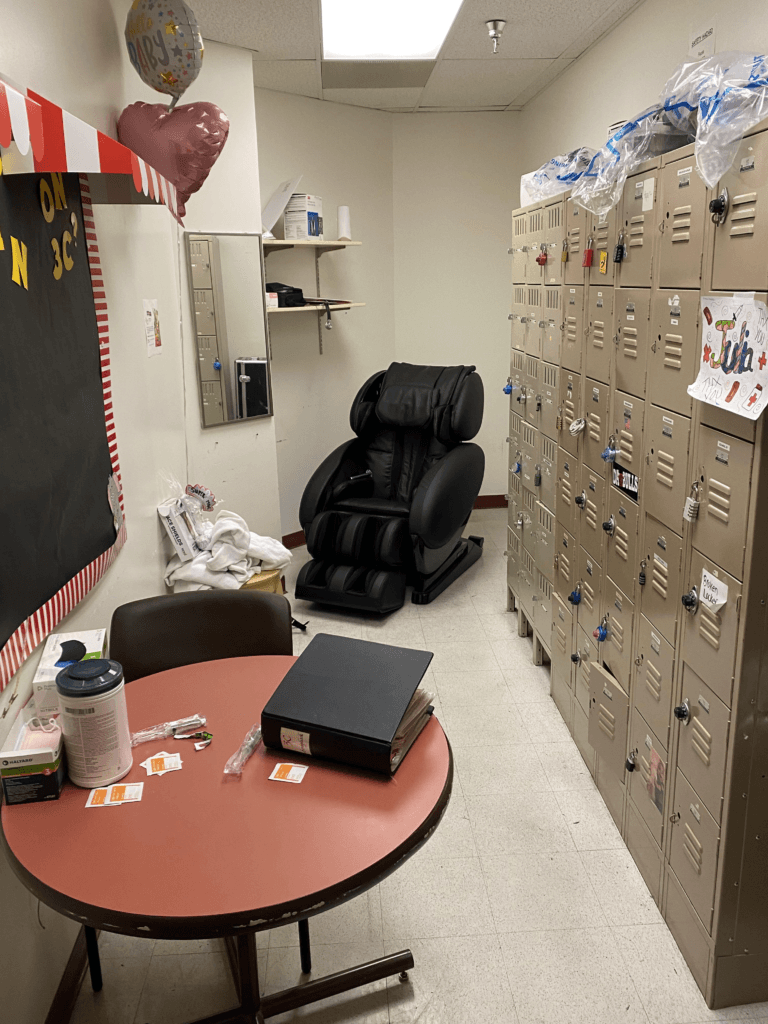
A lot of emphasis is placed on remuneration hence many strike actions, but I think feeling valued at work transcends financial recompense. In reality I find that pay does not exert as much influence on feeling valued as the ‘little things’ aforementioned. The answer to whether one feels valued at work or not does not lie solely in the payslip. It is the little things that matter. How often do you get commended at work? Or do you work in a constant environment of fear, perpetually petrified of being punished for a mistake or sacked? Do you feel a part of the change process at work? Do your opinions matter? Do they count?
This piece would be beneficial to the medical council or whoever organised that seminar. You raised some very useful points that drive the message home.